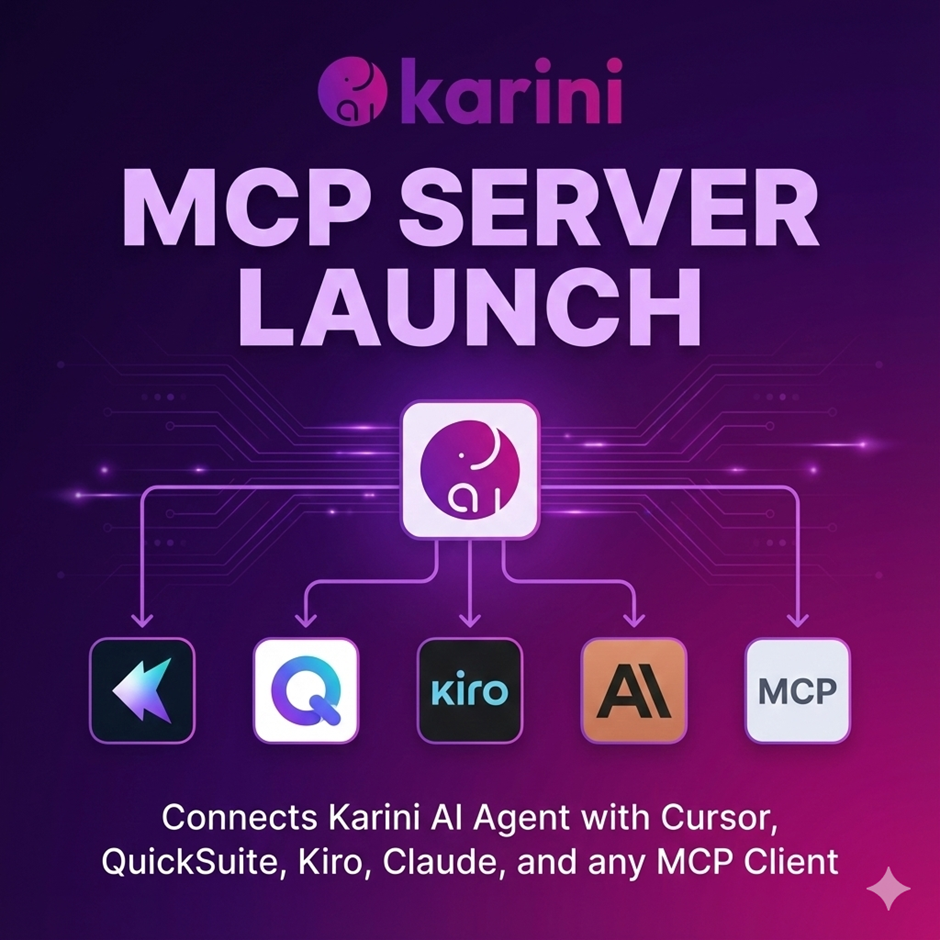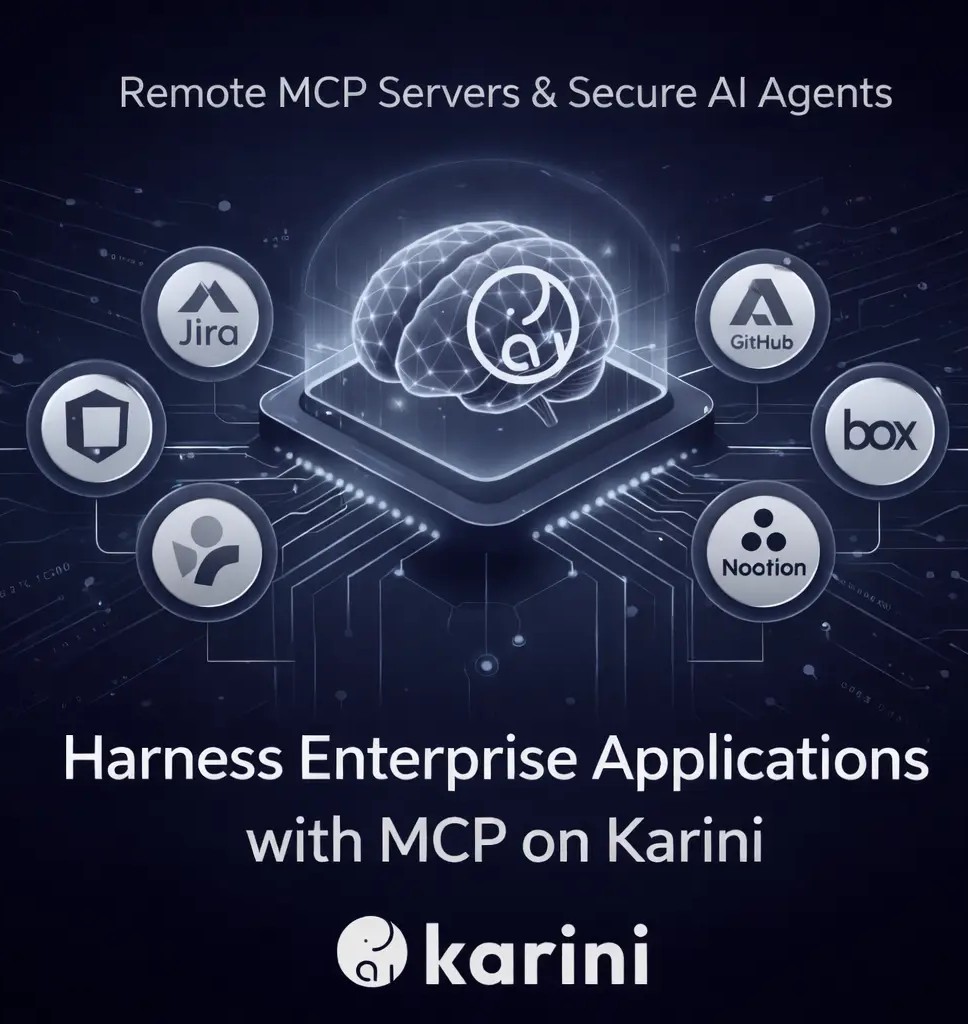
Model Context Protocol redefined the way LLMs and AI Agents have been interacting with Enterprise Data and applications. The protocol has evolved over the past year with every major data and apps provider launching their own MCP server to overcome security and governance challenges posed by earlier versions of community based servers. In early 2025, Karini had launched local MCP server support via stdio, SSE protocols and also released native SAP MCP server. We followed through with a launch of our own MCP server that provides the ability for any MCP client like Cursor, Kiro, Amazon Quicksuite to connect to Agents built on Karini.
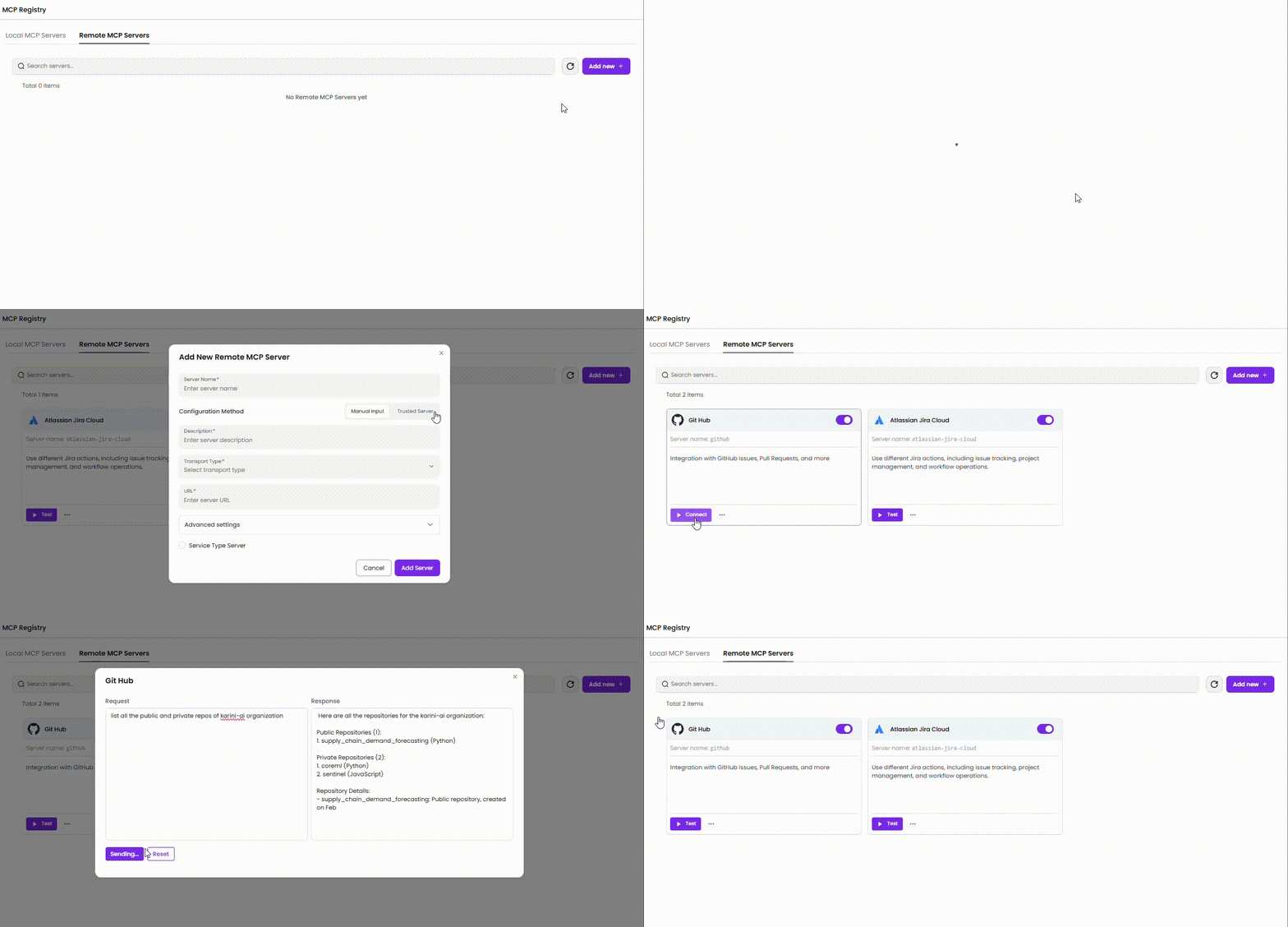
Today, we are excited to announce support for Remote MCP servers so you can connect to your favourite platforms such as Box, Notion, Atlassian or any other MCP compatible enterprise application. The remote MCP servers support Oauth2 credentials to ensure security and governance enforced by the MCP provider with full guardrails. With our MCP Registry approach, administrators have full control to enable a trusted remote MCP server via a central registry that builders and end consumers can access with their own credentials and access levels.
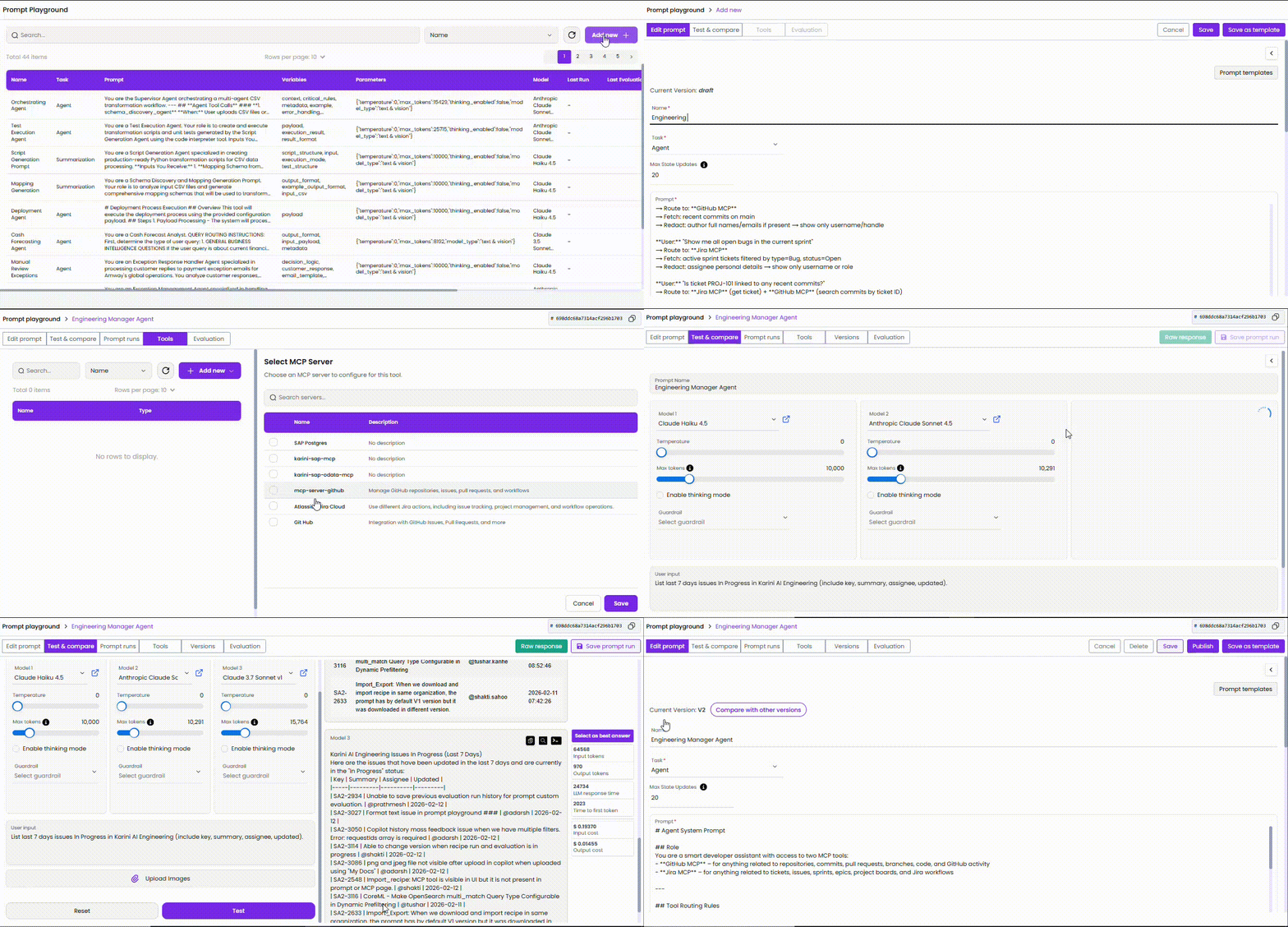
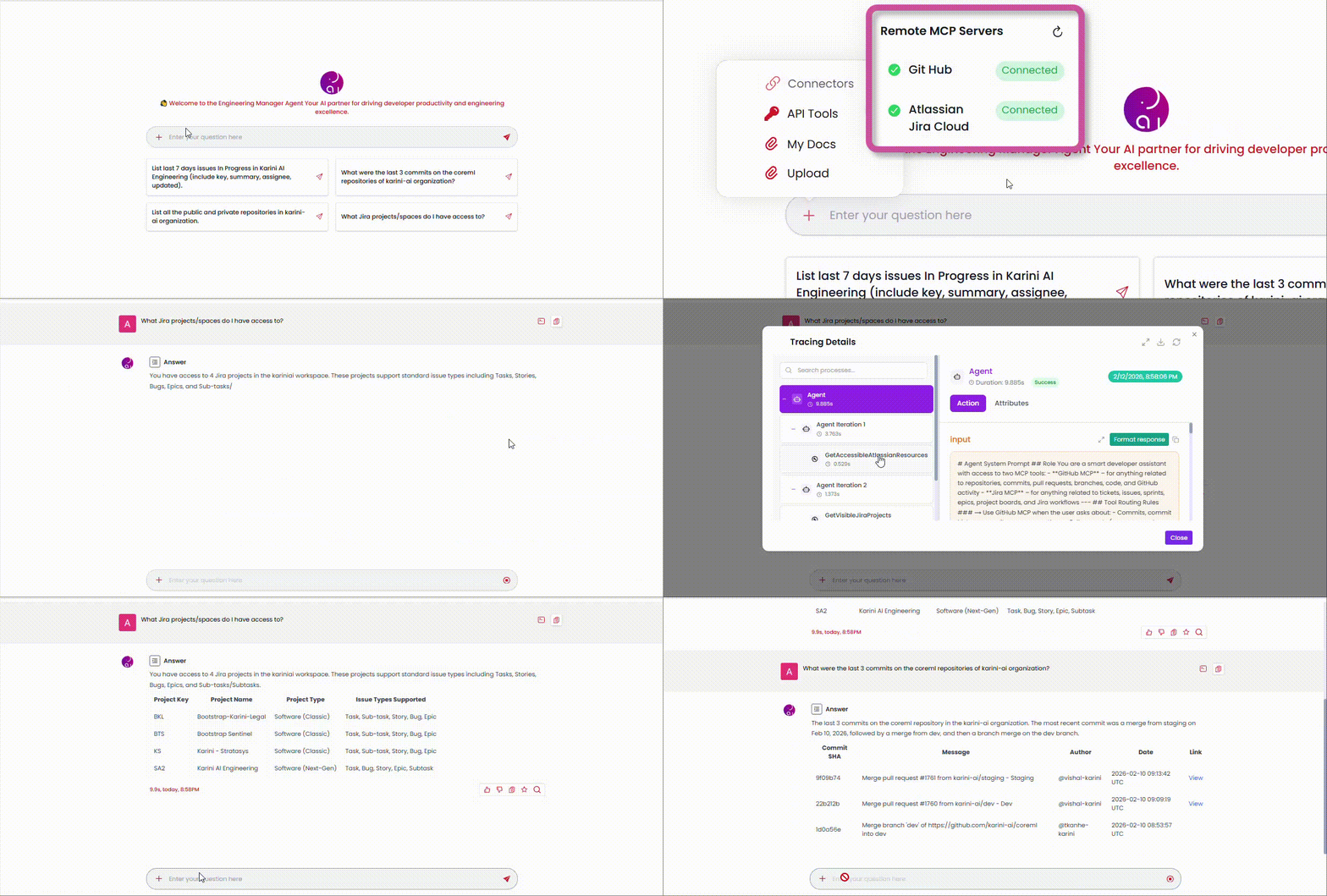
Lets do a quick walk through of potential of these workflows by building an app to monitor engineering productivity with Atlassian Jira and GitHub
See it in action in MCP Registry
See it in action in Playground
See it in action in Copilot
Key feature of Remote MCP server integrations are,
-
OAuth 2.0 Authentication: Connect securely to protected MCP servers with industry-standard OAuth 2.0. Our platform handles the complete authentication flow, including automatic token refresh, so your connections stay active without requiring re-authentication. Works seamlessly with both public and OAuth-protected servers.
-
Multi-Server Tool Orchestration: Access and execute tools from multiple MCP servers simultaneously within a single workflow. The platform automatically routes tool calls to the appropriate server, giving you a unified interface to work with diverse capabilities across your connected servers.
-
Enterprise-Grade Security: Built with security at the core, featuring OAuth 2.0 with PKCE for enhanced protection, secure credential management, and granular access controls at both organization and user levels. Your connections and credentials are protected throughout their lifecycle.
-
Intelligent Connection Management: Enjoy reliable, persistent connections that automatically validate and recover from issues. When credentials expire, the platform handles re-authentication gracefully, prompting users only when necessary while maintaining session continuity across your workflows.
-
Seamless Workflow Integration: MCP tools integrate directly into your agentic workflows alongside native tools. The platform handles all the complexity of server communication, error handling, and retries, so you can focus on building powerful AI agents without worrying about infrastructure.
-
Multi-Tenancy & Team Collaboration: Configure servers at the organization level for team-wide access, or set up user-specific connections for individual needs. Share service-level resources across teams while maintaining proper isolation and access controls for different user groups.
The road ahead
While SaaS providers are rapidly adopting MCP by releasing their own servers, only a handful of clients such as Claude and ChatGPT have integrated with them so far. This is just the beginning.
In the near future, every enterprise application will offer an MCP interface, much like REST APIs became the standard over the past decade. As this shift accelerates, enterprises need Karini AI, a secure Karini AI platform that provides centralized control over MCP connectors through a unified registry, enabling them to deploy AI-powered agents safely and at scale.
FAQ
What is Model Context Protocol (MCP) in enterprise AI?
Model Context Protocol (MCP) is a standard that lets AI agents securely connect to external tools and data sources like SaaS apps, databases, and internal systems. In enterprise environments, MCP provides a consistent way to integrate AI agents with governed, production-grade systems.
How do remote MCP servers and connectors work in Karini AI?
Remote MCP servers in Karini AI act as connectors to third-party applications such as Jira, GitHub, Box, and Notion. Administrators approve and register these servers in the Karini MCP Registry, and builders use them inside agentic workflows without managing custom APIs or credentials directly.
How does the Karini MCP Registry improve security and governance?
The Karini MCP Registry gives admins centralized control over which MCP servers are trusted and available across the organization. Access is governed through OAuth 2.0, PKCE, and role-based permissions so teams can use powerful MCP connectors while maintaining enterprise-level security and compliance.