Insights
Insights on Building Agentic Organizations
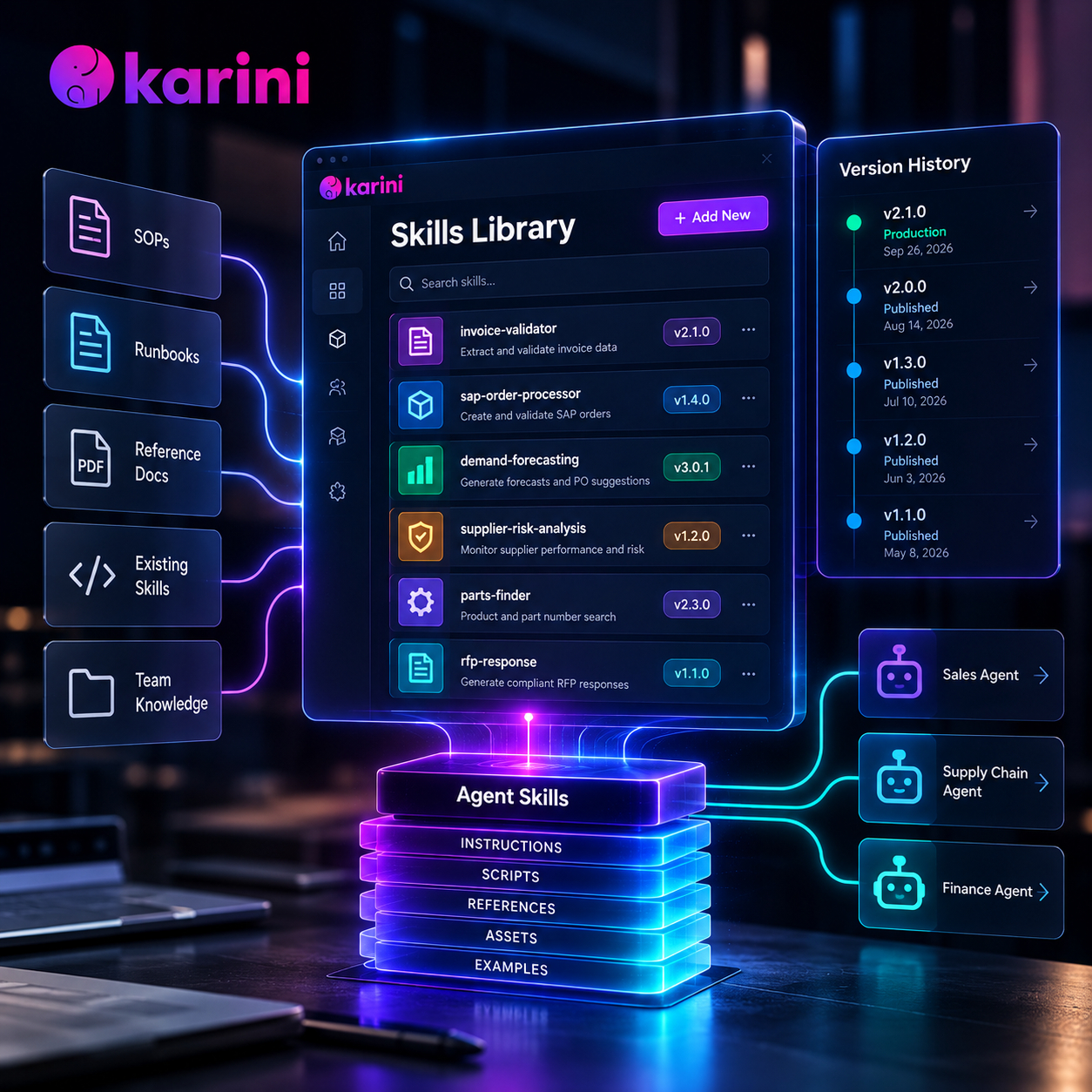
Introducing the Skills Library: Versioned, Reusable Expertise for Every Agent
TL;DR: *The Karini AI Skills Library is where your organization's agent skills live, change, and ship. Import a skill you already have, or hand Kai an SOP and watch it become one. Publish immutable versions, diff them before you ship, and pin every agent to the exact version it should run.* A skill rarely breaks in production because it was written badly. It breaks because someone improved it for one workflow and quietly changed it for five others. When we launched Agent Skills in August, we moved capabilities out of monolithic prompts and
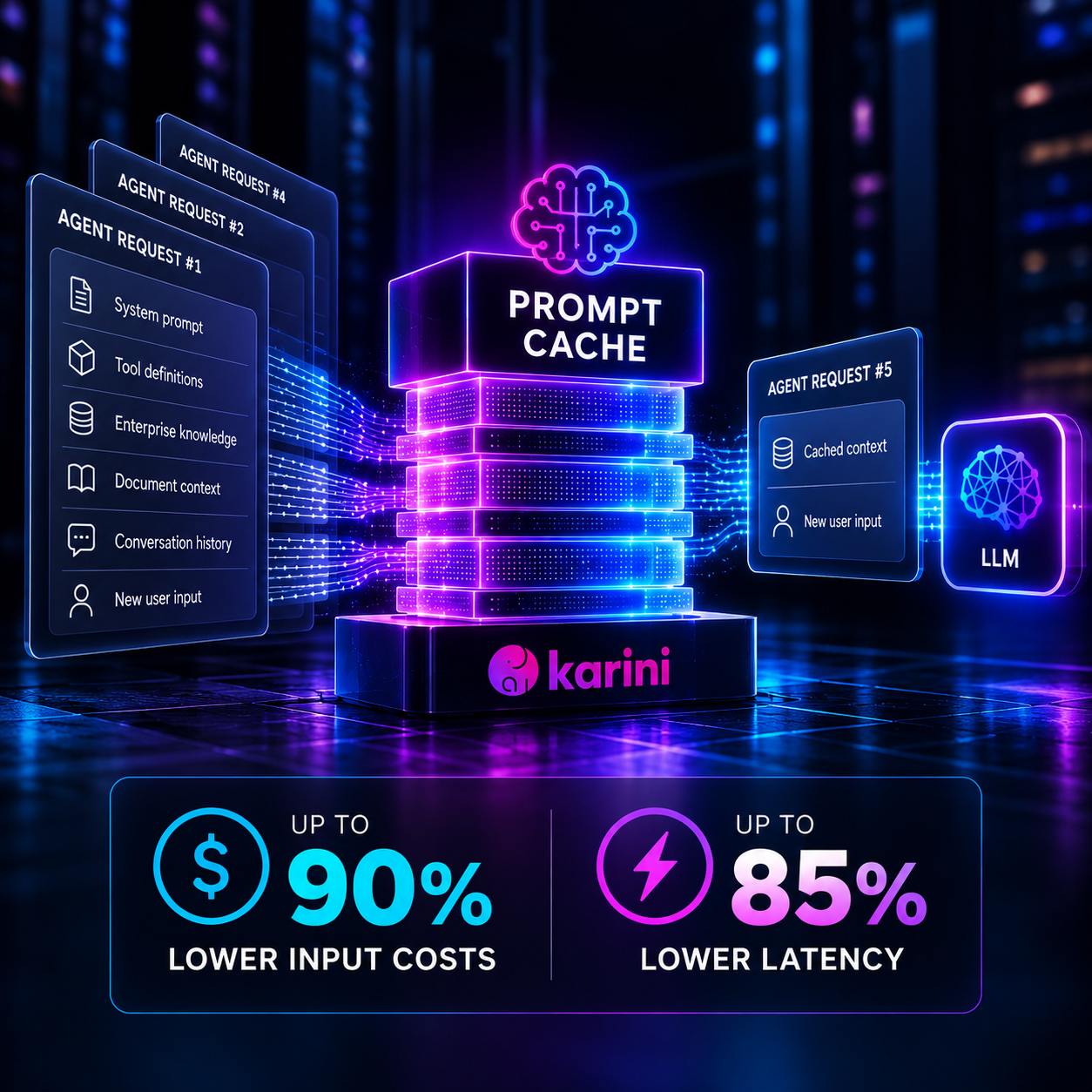
Introducing Prompt Caching: Cut LLM Token Costs for AI Agents
TL;DR: *Prompt caching (also called context caching) reuses the already-processed part of a prompt across LLM requests, so repeated context is billed at a fraction of the normal input price. With Amazon Bedrock prompt caching, that can reduce input costs by up to 90% and latency by up to 85%. Karini AI now supports it for prompts and AI agents, making it one of the simplest LLM cost optimization levers for enterprise agentic AI.* Most of what an AI agent reads, it has already read. Every iteration of an agent loop, and every question asked of the same long document, sends the model the s
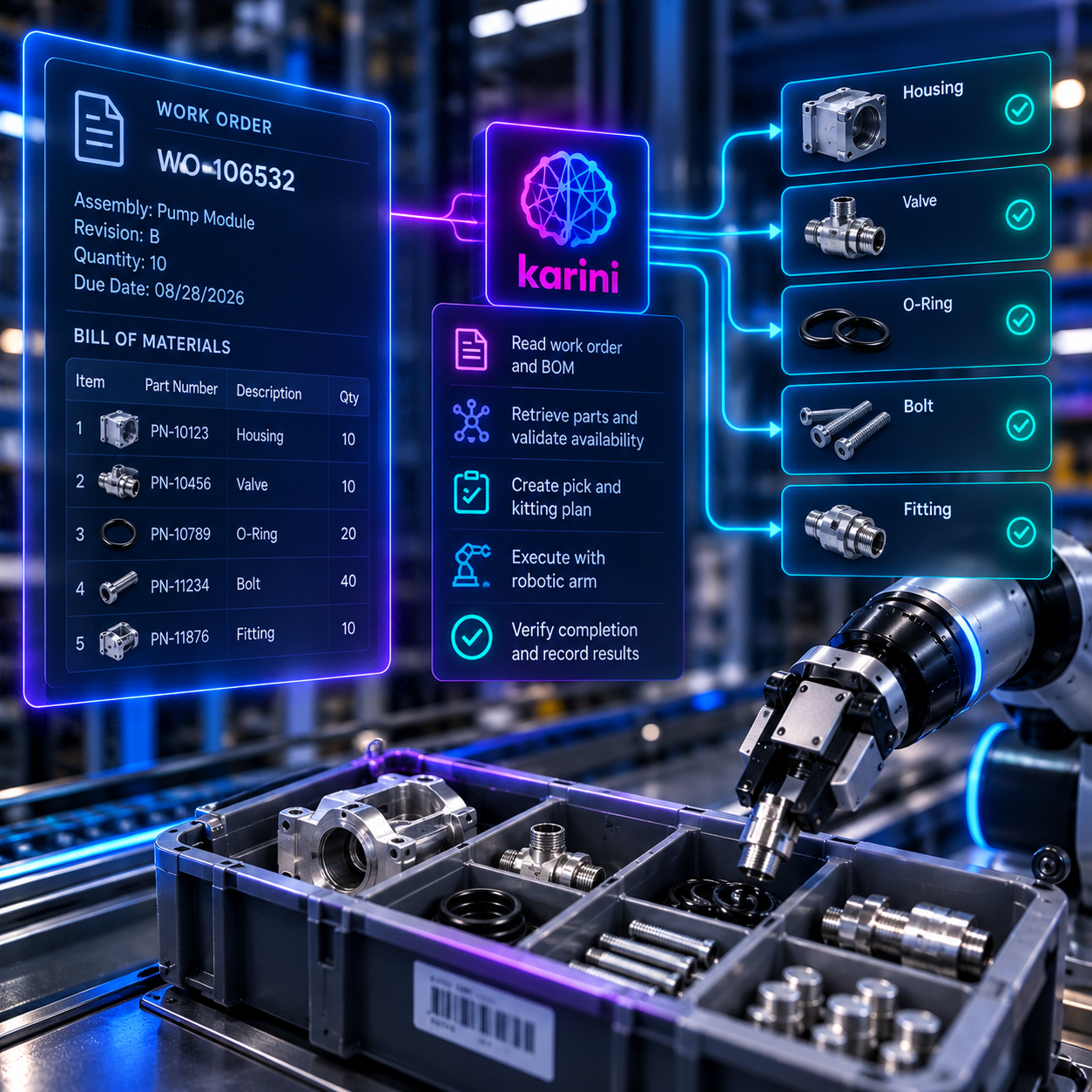
Hybrid Intelligence for Manufacturing OT
What is hybrid intelligence for manufacturing OT? Hybrid intelligence for manufacturing OT, often called hybrid AI, splits an AI system in two. A cloud agent does the reasoning: it understands the request, retrieves the governed procedure, and plans. A small local agent on the plant network holds the authority: it validates every step against physical limits before a machine moves. Reasoning goes where the compute is. Authority stays where the machine is. In short: - Onboard robot intelligence will always lag the state of the art. The hardware ships once; the models do not. - Cloud-
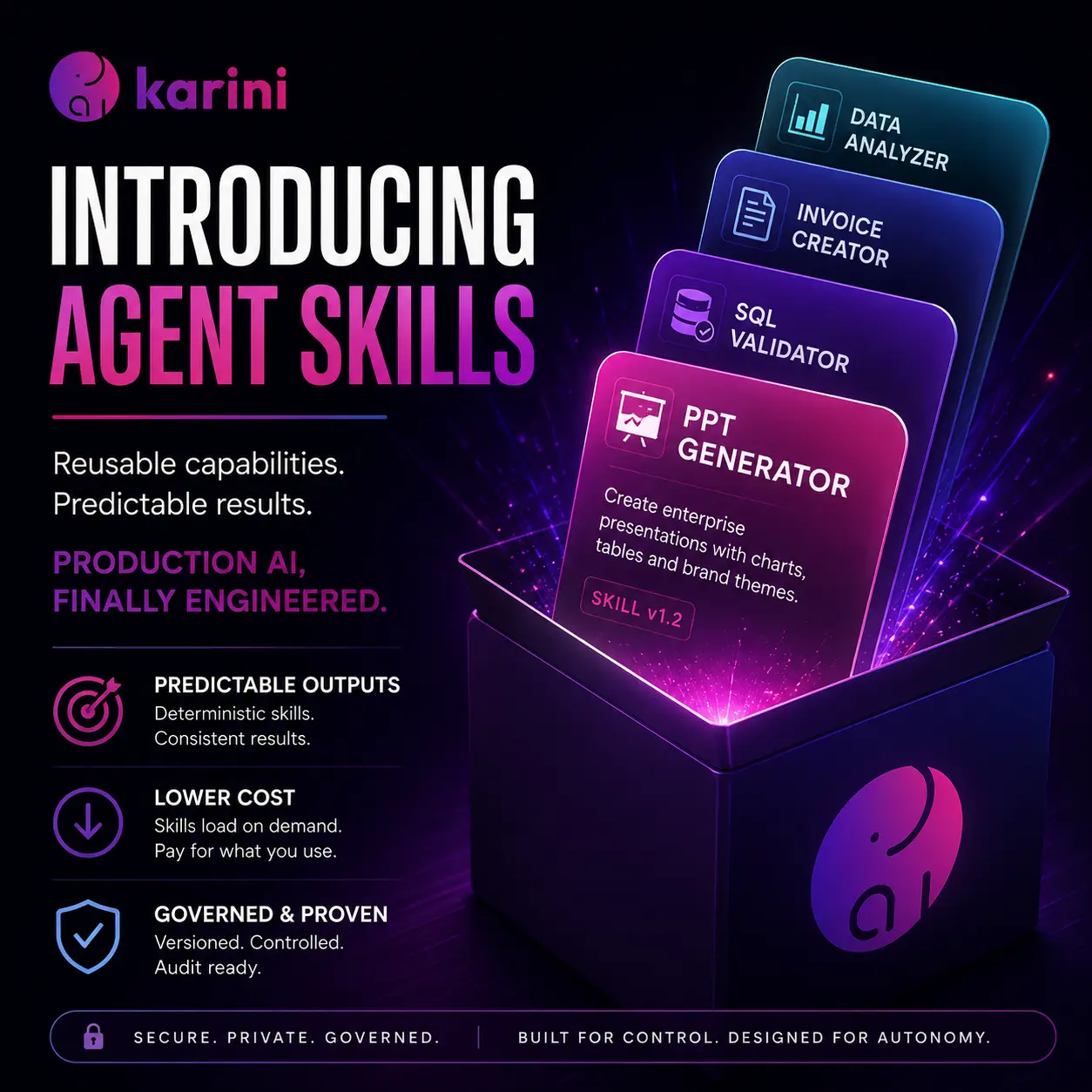
Introducing Agent Skills: Reusable Capabilities for Production AI Agents
TL;DR: Agent Skills are packaged agent capabilities. Each skill is a folder with a SKILL.md file containing instructions, plus optional scripts, assets, references, examples, and sub-agent roles. On the Karini AI platform, skills with scripts execute in the agent's live sandbox rather than only instructing the model. Sixteen skills ship natively. Skills are granted per agent, inspectable before enablement, recorded in run traces, and versioned with the agent so a rollback restores the exact capability set that was live. An agent rarely fails because the model is not smart enough. It f
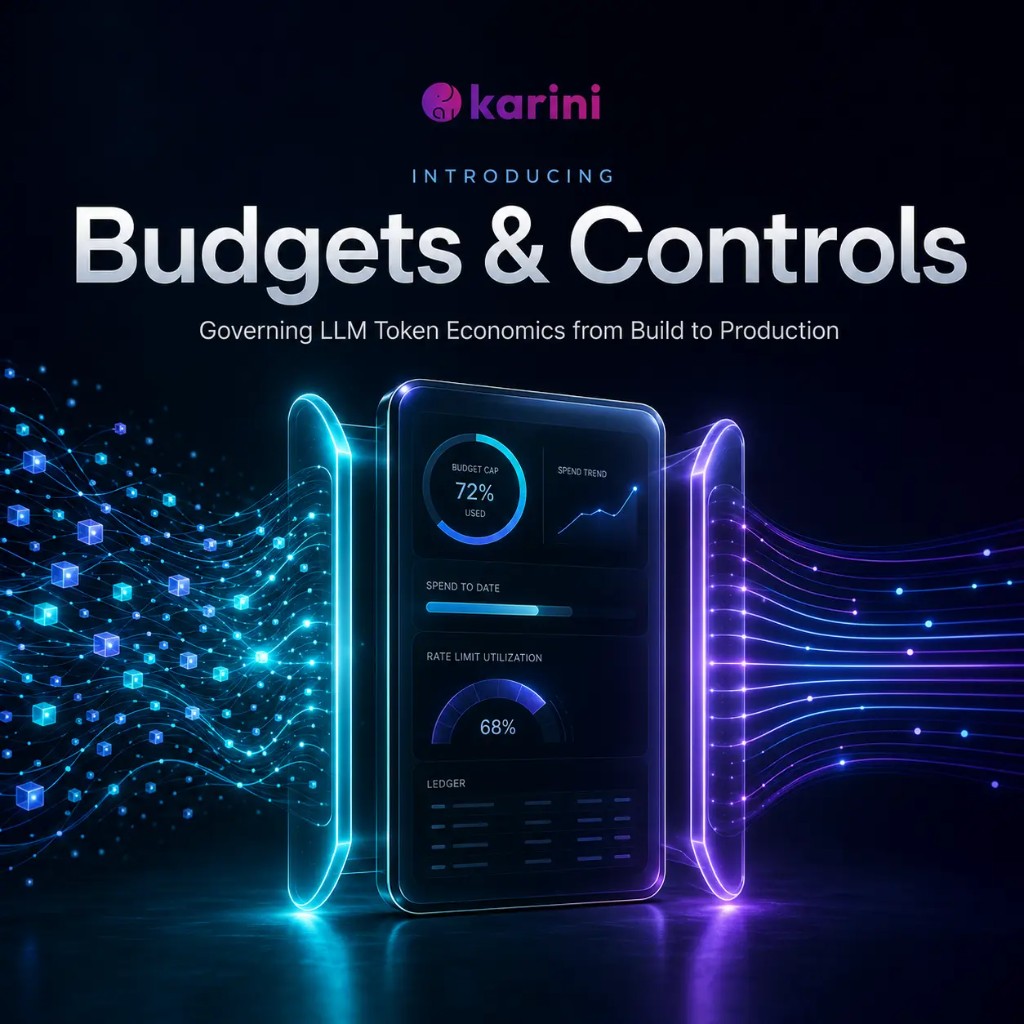
Introducing Budgets & Controls: Governing LLM Token Economics from Build to Production
An Agentic AI pilot rarely fails in development. More often, it stalls in production, when the monthly bill arrives. Enterprises have become adept at managing the cost of generative AI while they build. On the Karini AI platform, teams compare models in the Model Hub to select the best price-to-performance for each task, optimize agents during design to reduce token consumption, and generate fine-tuning datasets to distill larger workflows onto smaller, more economical language models (SLMs). At build time, cost is largely a design decision, and the platform gives teams the tools to optimize
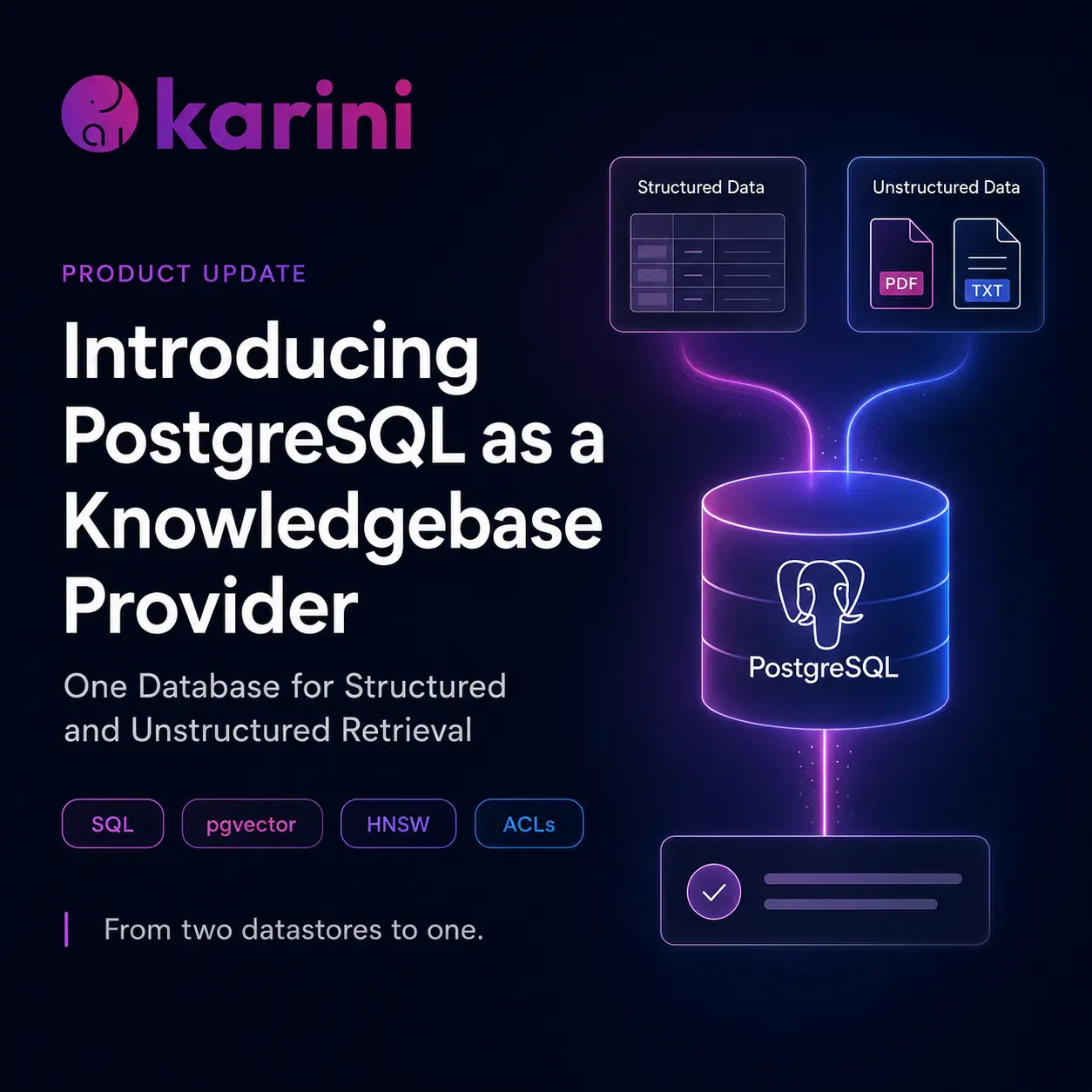
Introducing PostgreSQL as a Knowledgebase Provider: One Database for Structured and Unstructured Retrieval
Enterprise data does not arrive in a single shape. A construction bid history lives in Excel spreadsheets stored in Box. A spare parts catalog lives in a relational database. A library of service manuals lives in PDFs and engineering drawings. A product taxonomy lives in tables with hundreds of typed columns. And across all of it, business users expect to ask one question "what is the cost history for stainless steel fittings on healthcare projects in the Midwest?" and receive one grounded answer. Most enterprise AI architectures handle this by running two systems. A vector database f

Best Practices for Fine-Tuning Domain-Specific Models on AWS
Fine-tuning can improve performance when enterprise use cases demand domain language, task precision, and consistent output that prompting alone cannot reliably deliver. In this on-demand webinar, AWS and Karini AI share practical guidance on when to fine-tune, how to structure datasets and evaluation, and how to turn those decisions into measurable business outcomes. Best Practices for Fine‑Tuning Domain‑Specific Models on AWS Enterprise teams are under pressure to move beyond generic AI responses and deliver models that understand their domain, speak their language, and perform reliabl
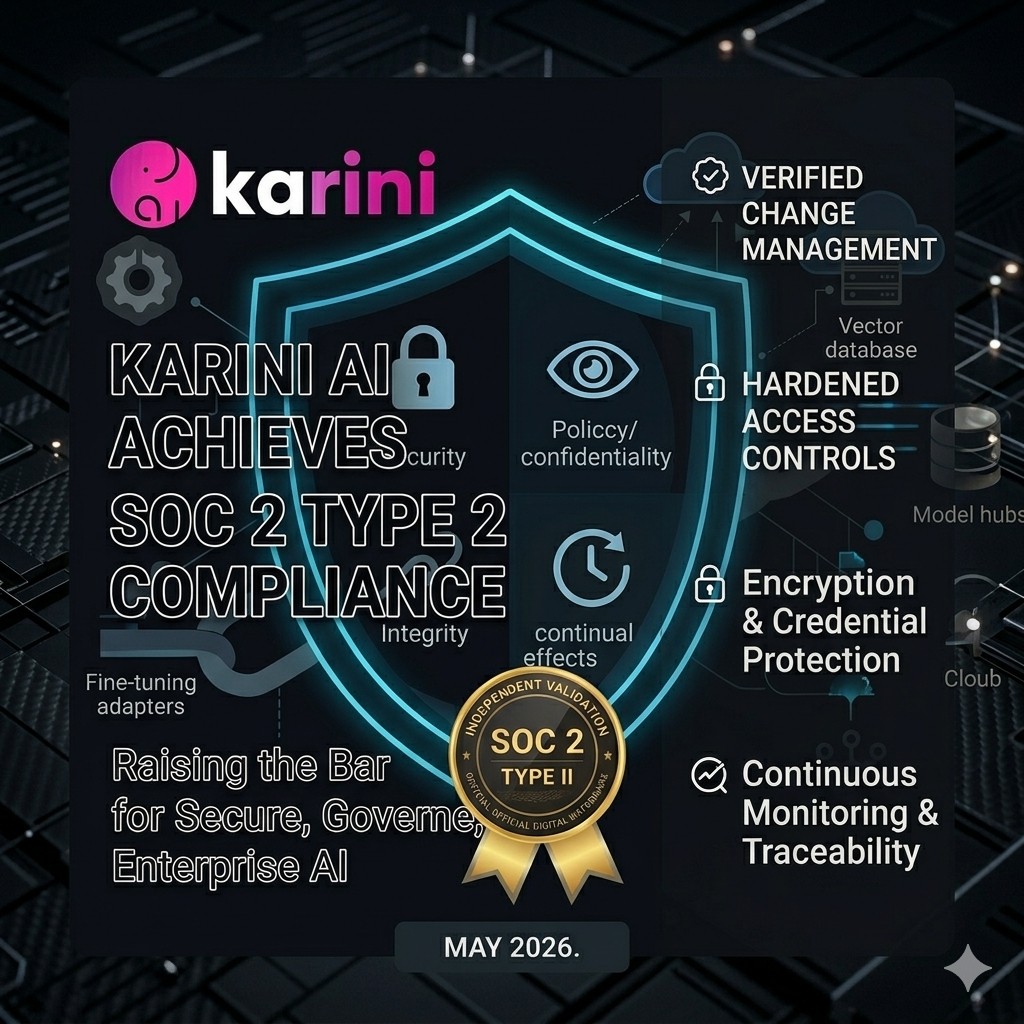
Karini AI Achieves SOC 2 Type II Compliance: Raising the Bar for Secure, Governed Enterprise AI
Enterprises are no longer asking whether to deploy agentic AI, they're racing to put it into production across procurement, customer service, manufacturing, and the back office. But as AI moves from experiment to critical infrastructure, it inherits a threat surface that traditional software security was never designed to cover. The pipelines that build, train, and serve modern AI systems have quietly become one of the most attractive targets in the enterprise, and most organizations don't yet realize how exposed they are. The risk is structural. A modern AI application is assembled from a d
Beyond Vibe Coding: Introducing Kai - Spec driven Agent Building
Vibe coding has its place. Cursor, Kiro, and the wave of AI-assisted dev tools have genuinely changed how individual developers ship code. But there's a quiet truth about that approach: it works because the human stays in the loop, catching the edge cases, testing as they go, discarding what doesn't work. Enterprise agents don't get that luxury. They run unattended at scale, outlive the engineers who first built them, and fail in ways that affect customers. The looseness that makes vibe coding fast is the same looseness that makes it brittle at production scale. Today we're introducing K
Securing the Agent Mesh: Enterprise-Grade Authorization for AI Agent Workflows
Enterprise leaders are deploying AI agents at an accelerating pace. The appeal is obvious: agents that can automate complex, multi-step business processes across departments, systems, and data sources. But as agent architectures evolve from single-purpose assistants to inter-connected Agent Meshes orchestrating work across entire organizations, one question moves to the top of every CISO’s list: Who is allowed to do what, and how do we enforce it? The answer is not simple, because enterprise agent security has two distinct dimensions that must work in concert: inbound authorization an
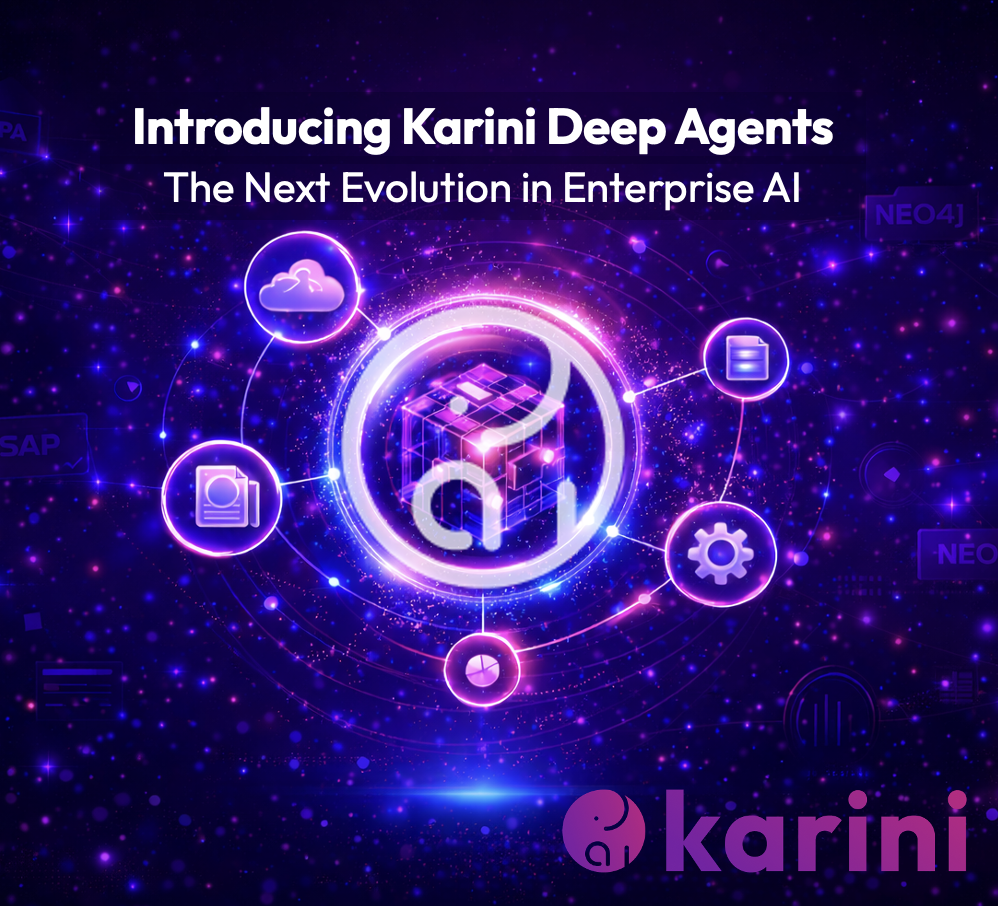
Introducing Deep Agents: Persistent, Interruptible, and Built for the Work That Actually Matters
Enterprise leaders are sold a compelling vision: AI agents that can automate complex, multi-step business processes end to end. Summarize a 200-page regulatory filing. Orchestrate a cross-department RFP response. Run a due-diligence review that normally takes a team of analysts two weeks. The reality? Most agent frameworks today break down the moment a task outgrows a single context window. When a workflow spans hundreds of pages, dozens of steps, and multiple sessions, conventional agents simply run out of room to think. At Karini AI, we built Deep Agents to close that gap. Not with increm
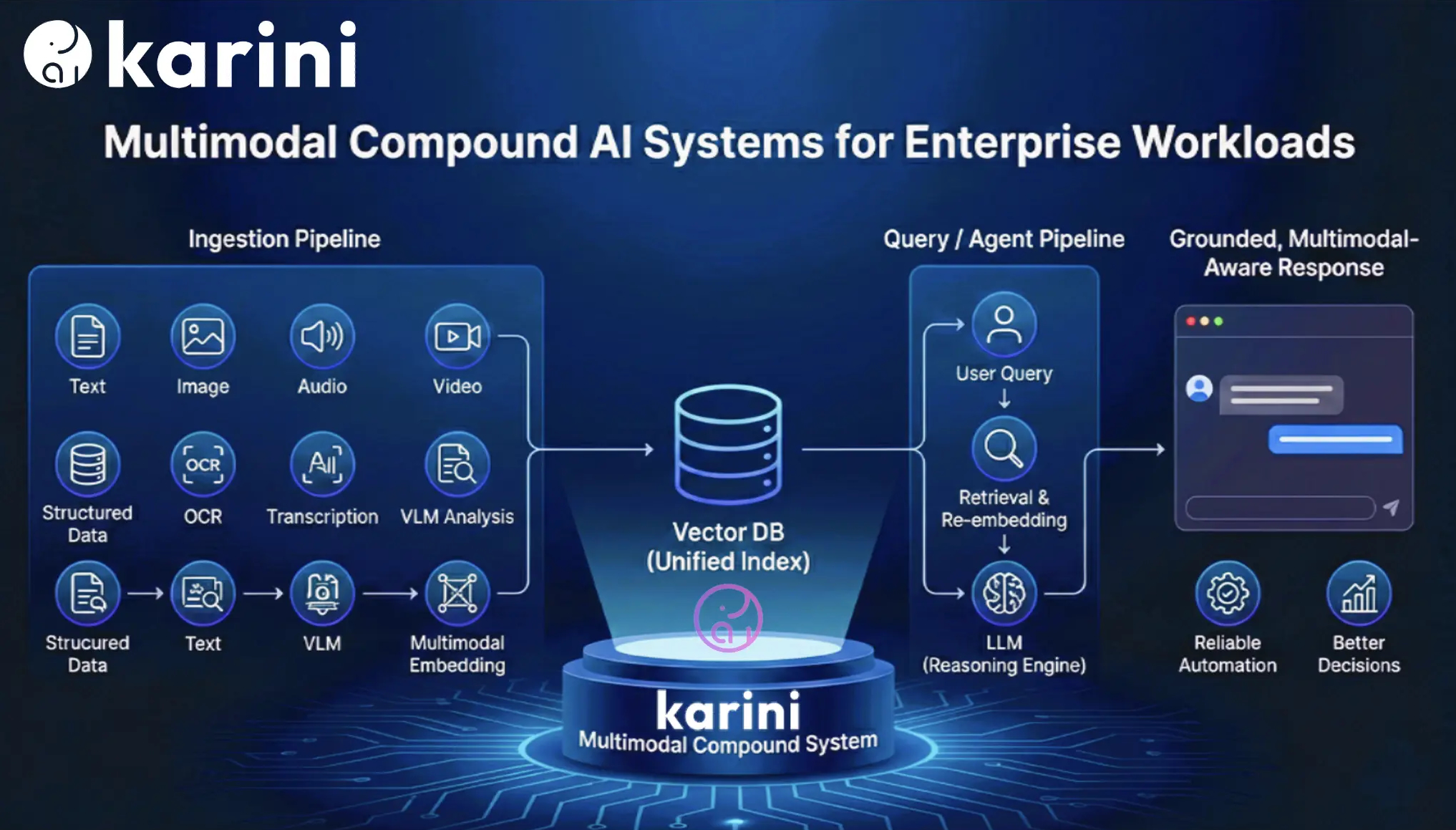
Multimodal Knowledgebases to Power Agentic Search: A Guide for Enterprise AI
Enterprise data doesn't arrive in a single format. Customer interactions span text tickets, screenshots, recorded calls, and videos. Product knowledge lives in PDFs filled with diagrams and annotated images. Operational signals flow in as logs, metrics, and sensor outputs. When AI systems treat these as isolated data sources, they lose the ability to reason across real-world workflows and that's where things break down. The impact shows up across industries. A customer support team loses resolution time when an agent can't connect a written complaint to the accompanying error screenshot and